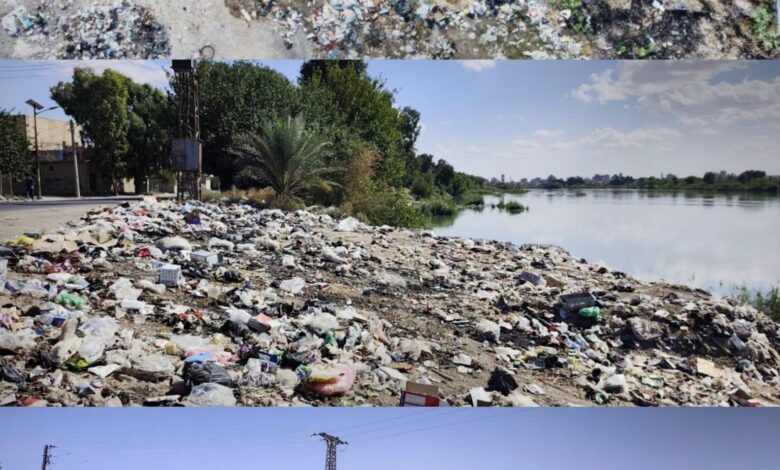
Waste spreads on the banks of the Euphrates River in the village of Al-Husseiniyah.. Amid calls for urgent intervention
This post is also available in:  العربية
The residents of Al-Hussainiya village in the Deir Ezzor countryside are facing a worsening hygiene situation, with waste continuing to accumulate on the banks of the Euphrates River for several months, in light of the shortage of containers and mechanisms designated for collecting and transporting garbage, which has led to the spread of random landfills and raised fears of environmental and health repercussions on the residents and surrounding agricultural areas.
A number of villagers explained that the delay in transporting waste led to a noticeable decline in cleanliness, in light of the absence of containers and regular sites designated for collecting garbage, which forces some residents, according to their statements, to burn the accumulated waste to dispose of it, which causes the emission of gases and smoke, in addition to concerns related to the spread of insects and rodents and their impact on public health and the agricultural environment.
In an explanation of the causes of the problem, the head of the Cleaning Department in Deir Ezzor, Marwan Al-Khalaf, indicated in a statement to «SANA» that complaints had been received from the people of Al-Husseiniyah regarding the accumulation of waste and its failure to be transported, indicating that the lack of containers and mechanisms designated for transporting garbage constitutes one of the most prominent obstacles to addressing this problem.
Al-Khalaf added that work is underway to address the shortage during the coming period, and to distribute the available capabilities according to needs, which will contribute to improving the conditions of cleanliness and responding to residents’ complaints.
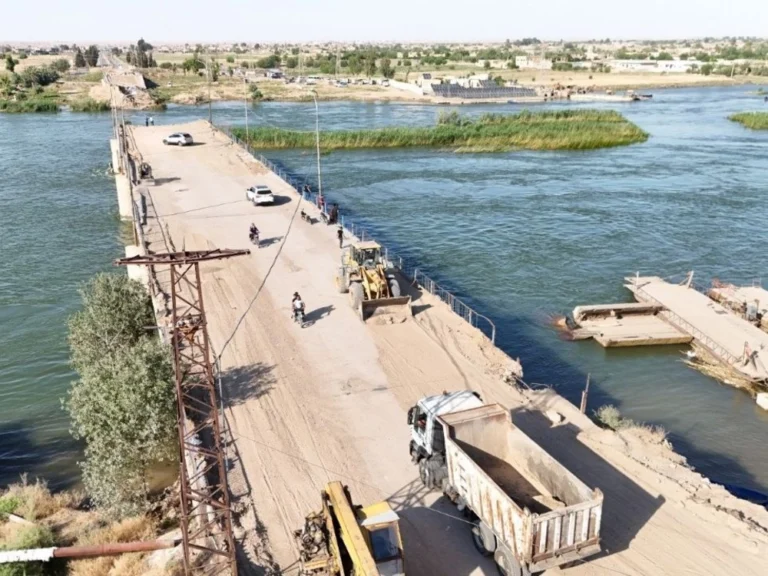
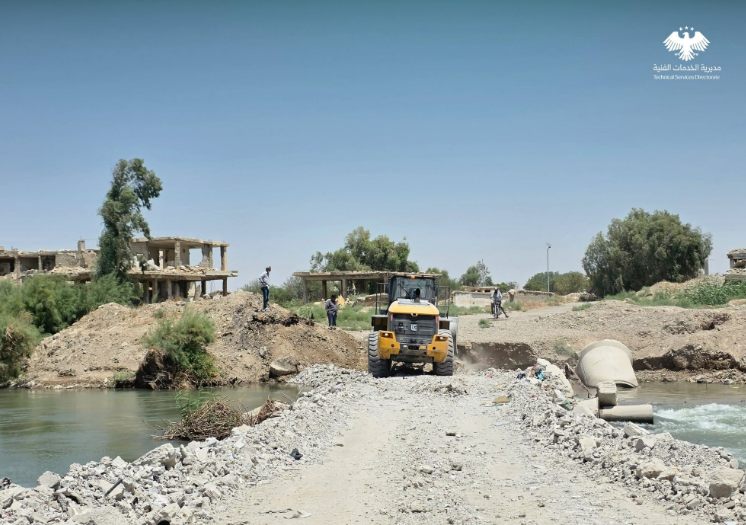
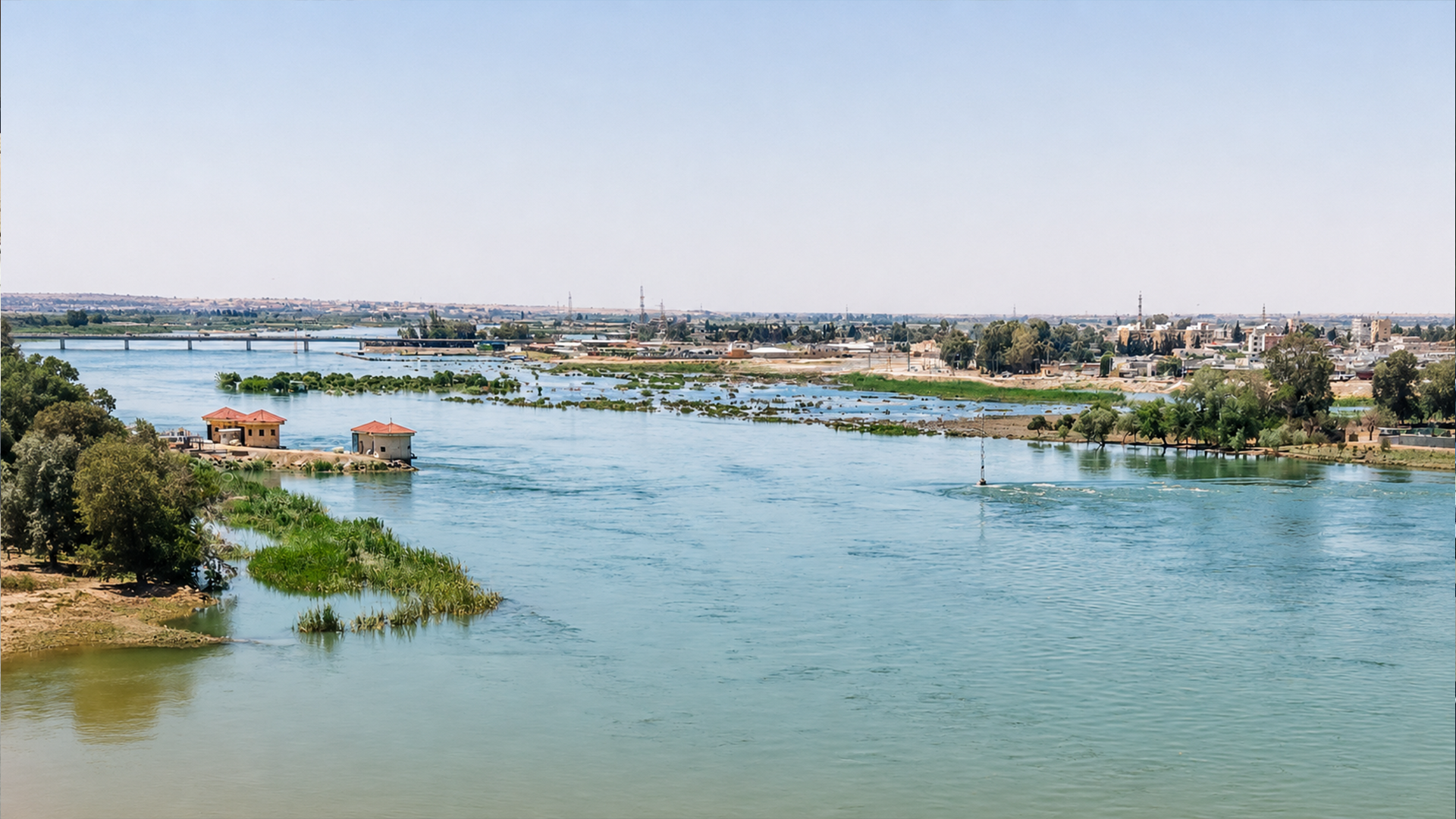
He explained that the rise in the level of the Euphrates River led to the earthen bridge being out of service, and also caused difficulties in the passage of machinery across the floating military bridge, which was directly reflected in the waste transfer operations and led to their temporary suspension, in light of the inability of cleaning machinery to arrive in the usual manner.
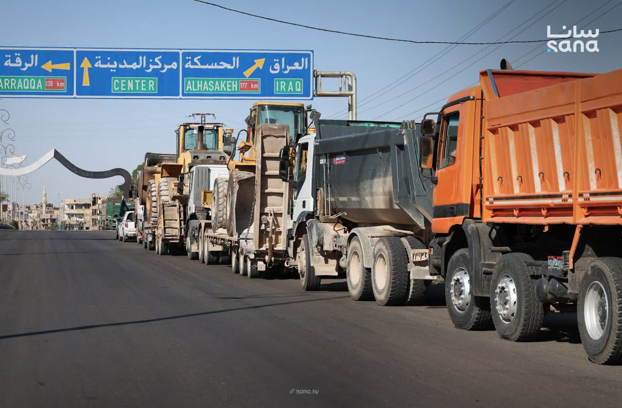
Al-Khalaf pointed out that the Cleaning Authority has begun implementing a work plan in the Hatla and Al-Salihiya areas, and that the work will expand to include the village of Al-Hussainiya as soon as conditions improve and the river level drops, allowing the resumption of waste transportation operations and access to the affected areas.
For their part, the people of Al-Husseiniyah called on the concerned authorities to intervene urgently to send the necessary mechanisms and transport the accumulated waste, stressing that the continuation of the current situation increases the daily burdens on residents, and makes treating the effects of pollution more difficult over time.
The residents stressed the importance of finding sustainable solutions that are not limited to temporary deportation campaigns, but also include providing appropriate containers and organizing waste collection and transportation operations on a periodic basis, in a way that prevents the renewal of random landfills and maintains the cleanliness of the Euphrates River bank and the safety of the surrounding environment.