Civil Society Initiative to Support the National Hospital in Al-Mayadeen
This post is also available in:  العربية
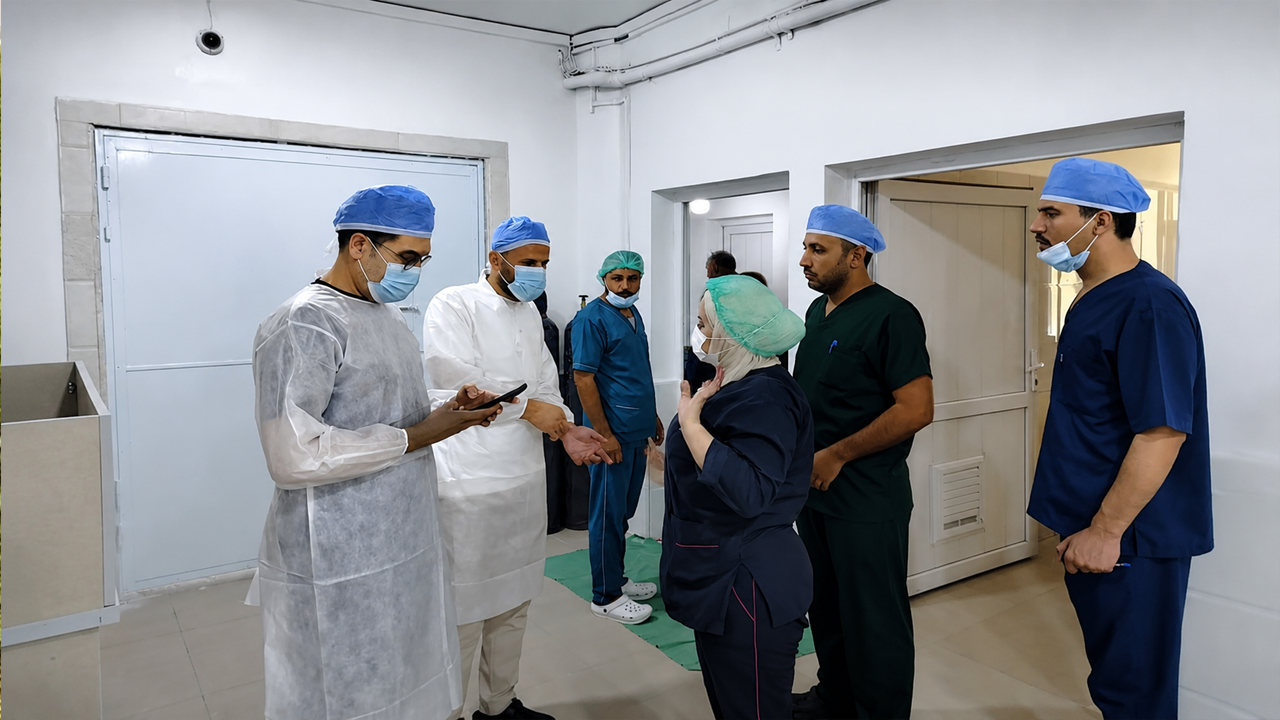
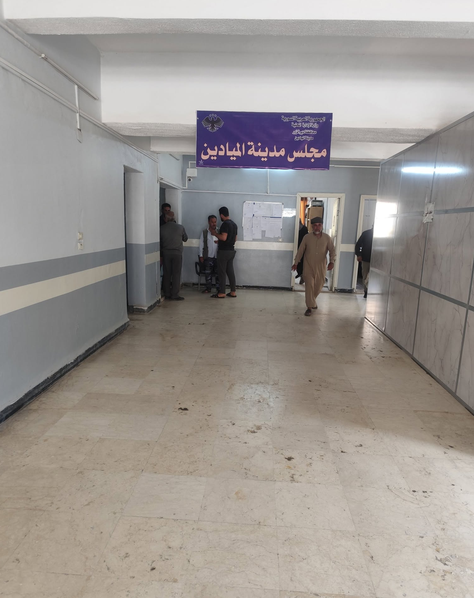
A group of residents from the city of Al-Mayadeen, east of Deir Ezzor, launched a volunteer initiative aimed at supporting the city’s national hospital, according to a DeirEzzor24 Network reporter.
Our reporter said that this initiative is part of growing grassroots efforts to support the deteriorating medical sector in Al-Mayadeen.
Dr. Ahmed Al-Hamad, an ophthalmologist and one of the initiative’s organizers, explained in an interview with DeirEzzor24 Network that the idea of the “Civil Society Initiative to Support the National Hospital in Al-Mayadeen” emerged in the first days of the fall of the Assad regime in the region. A number of Deir Ezzor doctors proposed the initiative, and residents of the city and the surrounding countryside were then involved.
Al-Hamad indicated that the Al-Mayadeen National Hospital was chosen due to its geographical location, which serves more than 300,000 people. He also noted that it is one of the few facilities that has not been completely destroyed, making it a suitable starting point for any healthcare effort.
He added that the support was divided into two parts: financial donations and in-kind donations, most notably an electrical transformer and some essential medical equipment. He emphasized that the collection of donations was carried out legally and in accordance with the regulations of each country. For example, in Germany, the campaign was implemented in cooperation with the government-licensed Ihsan organization, which facilitated organizational and logistical processes.
He explained that the campaign was not limited to medical personnel, but rather was launched with broad participation from the people of Mayadin and its countryside, including businessmen and representatives of various segments of society. It was implemented in direct coordination with the Deir Ezzor Health Directorate and under the supervision of specialized committees in administration, media, and implementation.
He pointed out that one of the most prominent challenges they faced was the sanctions imposed on Syria, which hindered the expansion of meeting the growing medical needs. He noted that the health sector in Deir Ezzor is suffering from accumulated crises that exceed the capacity of limited initiatives, especially in light of the severe shortage of medical personnel resulting from the emigration of most doctors abroad.
He emphasized that the campaign achieved results beyond expectations, even though the extent of the damage to the health infrastructure exceeded the available support capabilities. However, what was accomplished constitutes an important and satisfactory emergency response at this stage.
He concluded by emphasizing that coordination is ongoing with the Deir Ezzor Health Directorate to determine health priorities. He revealed future plans, including the establishment of a blood bank and a dialysis unit, which will contribute to improving basic medical services and enhancing the National Hospital’s ability to respond to the growing needs in the region.
This initiative comes in light of the severe deterioration of the health sector in Deir Ezzor province and is an attempt to bridge part of the gap in medical services.