
This post is also available in:
 العربية
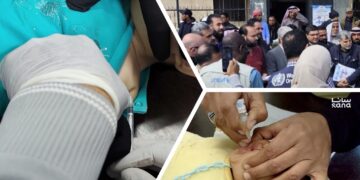
With the beginning of the truffle collecting season in the Syrian desert, warnings are renewed about the deadly dangers facing civilians searching for them, as this activity has turned in recent years into something resembling a “death journey” as a result of the widespread spread of mines and war remnants.
Mines planted during the years of conflict have caused civilian casualties repeatedly with each season, as many residents head to the desert in search of a source of livelihood, despite the great risks that threaten their lives.
The Ministry of Emergencies and Disaster Management in Syria had warned of the increasing dangers during the truffle collection season, stressing that the desert areas are among the most dangerous environments due to the random spread of mines.
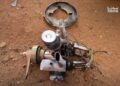
For its part, the Syrian Civil Defense explained in a post on Saturday evening that mines are often hidden under dirt or among rocks and plants, which makes them extremely difficult to detect and increases the possibility of injuries.
The concerned authorities called on citizens to adhere to safety measures, most notably walking on paths previously used by humans and vehicles, and avoiding touching any foreign object or approaching abandoned buildings and sites of previous clashes.
The concerned authorities also stressed the need to exercise extreme caution during the search, noting that the safest option remains to avoid entering areas suspected of containing mines.
Despite these warnings, many residents continue to head to the desert, driven by the rising prices of truffles, which range between 200,000 and 250,000 Syrian pounds per kilogram, and may exceed that depending on quality and scarcity.
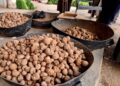
The Syrian truffle varies into several types, the most prominent of which are the Zubaidi, red, white, Jubaih, and Hopper, and “Zubaidi” is considered one of the most expensive of these types, as the weight of one piece may sometimes reach a full kilogram.
Syrian truffles have a good reputation in foreign markets, as they are exported to a number of countries, including Lebanon, Iraq, the Gulf states, and Turkey, in addition to some European countries, via land and air shipping.