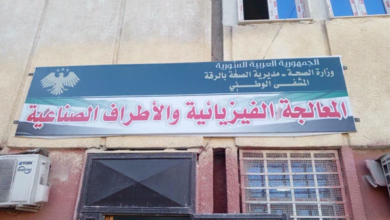
Qamishli National Hospital opens a prosthetic limb department with support from the International Red Cross
This post is also available in:  العربية
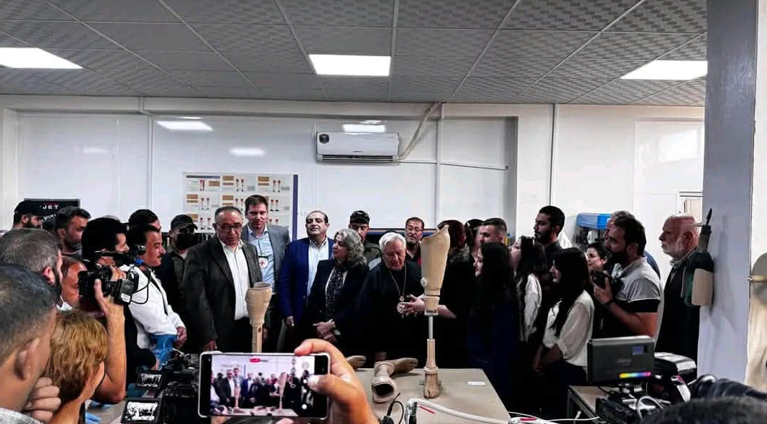
In a humanitarian and medical move that enhances recovery opportunities and gives people with disabilities new hope for regaining mobility and independence, Qamishli National Hospital witnessed the opening of the Prosthetics and Physical Rehabilitation Department, under the auspices of the Health Directorate and in cooperation with the International Committee of the Red Cross (ICRC). The hospital aims to expand the scope of services provided to amputees and people with disabilities, helping them regain their mobility and integrate into society.
The department’s opening comes after its expansion, bringing the number of beneficiaries to approximately 40, compared to approximately 20 previous beneficiaries. This move will enhance the department’s capacity and meet the needs of a greater number of visitors by providing prosthetic limbs, crutches, and wheelchairs, tailored to each beneficiary’s needs.
The department offers a package of medical and rehabilitation services, including diagnosis and the installation of prosthetic limbs and orthotics, in addition to physical rehabilitation sessions aimed at improving motor abilities and helping beneficiaries regain the greatest possible degree of independence in their daily lives.
These services are provided free of charge to visitors, under the supervision of a specialized medical and technical staff who have received training according to specialized professional standards, which contributes to providing appropriate care and keeping pace with the needs of beneficiaries during the rehabilitation and movement restoration stages.
The importance of this step is not limited to strengthening medical services at Qamishli National Hospital, but extends to its humanitarian and social dimensions, as obtaining prosthetic limbs, assistive devices and appropriate rehabilitation is a fundamental factor in enabling persons with disabilities to practice their daily lives, enhancing their participation in society, and restoring their confidence in their abilities.
This project reflects the importance of cooperation between health institutions and humanitarian organizations in supporting the most needy groups, providing specialized services that contribute to improving the quality of life, reducing burdens on beneficiaries, and opening broader horizons for them towards recovery and independence.
Hence, the opening of the Prosthetics and Physical Rehabilitation Department represents not just an addition to medical services, but a humanitarian step towards a more independent and dignified life, and a message of hope confirming that restoring movement is not just a physical ability, but a new beginning to restore confidence and effective participation in life.