From thirst to the collapse of pastures.. Is Deir Ezzor’s animal wealth facing existential threat?
This post is also available in:  العربية
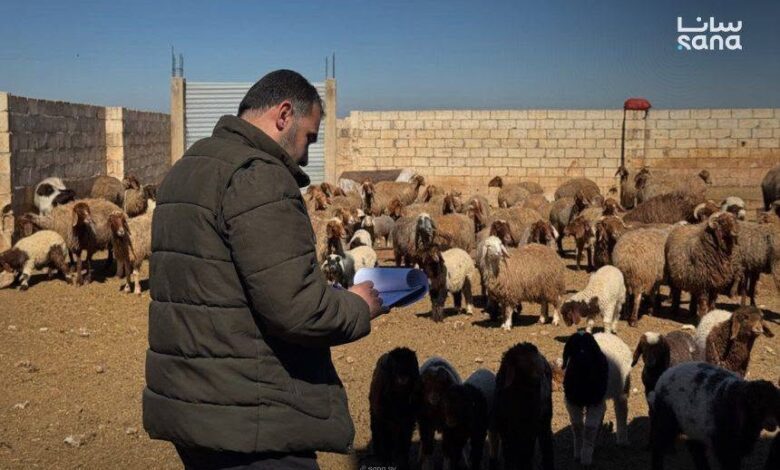
Livestock in Deir Ezzor Governorate faces increasing challenges that threaten its stability and productivity, in light of the worsening effects of drought, the high costs of making water available, and the decline in veterinary services, despite the governorate possessing large and diverse numbers of livestock that constitute a fundamental pillar of the agricultural economy and a source of livelihood for thousands of breeders.
Statistics from the Directorate of Agriculture and Livestock in Deir Ezzor for the year 2026 revealed the presence of more than 3 million heads of livestock, led by sheep with about 2 million 653 thousand and 308 heads, followed by goats with 237 thousand and 333 heads, and cows with 103 thousand and 614 heads, in addition to 13 thousand and 116 heads of camels, 4 thousand and 776 heads of horses, and 136 heads of buffalo, in addition to two thousand and 165 beehives.
The head of the Department of Health and Animal Production in the Deir Ezzor Agriculture Directorate, MohammedHaidaer, said in a statement to SANA that drought is one of the most prominent challenges facing the livestock sector, as it has direct effects on the numbers of herds and their levels of meat and milk production, which negatively affects the income of breeders and their ability to continue raising livestock.
Haider added that making water available constitutes a major economic burden on breeders, especially during the summer, as the costs of transporting water by tanks account for between 30 and 50 percent of their operating expenses, which increases the financial burdens and doubles the difficulties of raising herds in areas suffering from scarcity of water resources.
The challenges are not limited to drought and high production costs, but extend to the decline in veterinary services. The withdrawal of the 21 veterinary centers in the governorate from service during the war years led to great difficulties for the Department of Health and Animal Production in providing the necessary services to breeders, limiting the spread of diseases and providing health care for herds.
The absence of these centers poses an additional challenge to livestock conservation, especially in light of the challenging climatic conditions that increase livestock’s need for healthcare and veterinary intervention, ensuring loss reduction and maintaining production levels.
In a related context, the Syrian desert stands out as one of the most important natural resources supporting livestock, as it covers more than 55 percent of Syria’s area, and constitutes the main stock of fodder, with the natural pastures it provides that sheep, goat and camel breeders depend on.
However, this vital resource has been severely degraded, affecting approximately 75 percent of its area, in recent decades, as a result of human malpractice, climate change, and recurring droughts. This has impacted vegetation cover and the ability of natural pastures to provide fodder for herds.
These data present challenges facing the livestock sector in Deir Ezzor, requiring enhanced water resource management, rehabilitation of veterinary centers, protection of natural pastures and regulation of their investment, in addition to supporting breeders and reducing production costs, which contributes to preserving livestock as one of the most important components of food security and sources of income in the governorate.
