After more than 15 years of hiatus.. Work has begun to isolate water drains in the eastern countryside of Deir Ezzor to revive agricultural lands and reduce swamps
This post is also available in:  العربية
The workshops of the Water Resources Directorate in Deir Ezzor Governorate have begun implementing the work of isolating and cleaning water drains in the sixth sector, within the areas of Al-Shehail, Dhiban and Hawaij Dhiban, located east of the Euphrates River, in a step aimed at rehabilitating the water drainage network, improving its efficiency, and reducing the agricultural, environmental and health problems that the region has suffered from for many years.
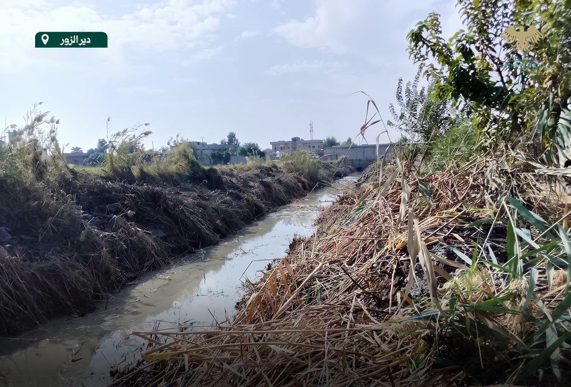
These works are of particular importance given that they come more than 15 years after the cessation of sewage treatment operations. This has led, over the past few years, to the accumulation of large quantities of silt, sediments, weeds, and aquatic plants within the drainage channels. It has also led to the accumulation of stagnant water and the blockage of sections of sewage, causing the formation of swamps and wet areas that have negatively impacted agricultural lands and the environmental and health conditions in the area.
Ongoing work includes removing mud deposits, weeds and plants accumulated in drains, opening blocked sewers, and cleaning drainage channels to allow improving water flow and ensuring its ability to get rid of excess water in agricultural lands.
These measures will contribute to reducing pressure on the drainage network and limiting the rise in water levels and their accumulation in fields, especially in low-lying lands that are directly affected by weak drainage and blocked drains. This will help reduce the phenomenon of sifting and the rise in the level of groundwater, and the accompanying risks of soil salinization and a decline in its fertility and agricultural productivity.
The importance of isolating drains is not limited to agriculture alone, but extends to improving the environmental and health conditions of residents in the targeted areas. The accumulation of stagnant water and the formation of swamps provide a suitable environment for insect reproduction, in addition to the spread of unpleasant odors and unhealthy environmental phenomena.
Improved water drainage and a reduction in stagnant communities are expected to contribute to alleviating these problems and improving the environment surrounding agricultural lands and residential areas, positively impacting the living conditions of residents and farmers.
Rehabilitating water drains is one of the basic measures to maintain the safety of agricultural lands and the sustainability of their investment, especially in areas that depend on agricultural activity as a major resource for the livelihood of the population, as the regularity of the drainage process constitutes an important factor in preserving the properties of the soil and reducing its deterioration as a result of high humidity and salt accumulation.
These works also contribute to improving water resource management and enhancing the efficiency of irrigation and drainage infrastructure, supporting the stability of agricultural activity and alleviating the burdens borne by farmers as a result of problems caused by clogged drains and their declining water drainage capacity.
In this context, the Ministry of Energy extends its thanks and appreciation to the technical and labor cadres in the Water Resources Directorate in Deir Ezzor, for their field efforts and continuous work to rehabilitate drainage networks and raise their efficiency, which contributes to protecting agricultural lands, improving the environmental and health status, and enhancing the living conditions of the people in the targeted areas.
These works constitute an important step towards addressing the accumulations of long years of neglect and cessation, and returning water drains to performing their primary role in protecting agricultural lands and discharging excess water, which opens the way for improving the agricultural and environmental conditions in the Deir Ezzor eastern countryside.